

- 0
- 535 words
The American Bar Association’s accreditation council voted to remove or downsize three diversity requirements at an Aug. 21 meeting. The ABA accredits 198 law schools, including UT. The vote came on the same day the Department of Education made a recommendation to strip the ABA council of its federal recognition.
The American Bar Association’s accreditation council is a federally recognized organization that accredits law schools, or officially recognizes if law schools meet a set of standards, while the larger American Bar Association is a professional trade organization for attorneys that is independent from the council. All 50 states have a state bar association that decides who can take the state bar, the exam that allows an attorney to practice in the state. If you graduate from a law school accredited by the ABA council, you can sit for the bar exam in any state.
The changes the ABA council voted on in August include repealing a requirement for schools to teach students about bias, racism and cross-cultural competency, along with removing any mention of race, color and ethnicity in its nondiscrimination rule. The council also voted to formally repeal the requirement for schools to uphold a commitment to diversity in recruitment and admissions, which must be approved by the policymaking body before going into effect.
The council initially voted on repealing the admissions requirement in early August, but the ABA’s main policymaking body referred it back to the council where it was voted on again on Aug. 21. The policymaking body will vote on the repeal on Sept. 8.
“The changes to the ABA requirements don’t affect us because we had no special policies or activities designed to meet those requirements per se,” said Christopher Roberts, the executive director of marketing and communications at UT Law. “We are just organically doing things that don’t really come under ABA scrutiny like that.”
The Department of Education recommended removing the ABA’s accreditation because they believe the accreditation council is not sufficiently independent from the ABA, took too long to remove the diversity rule and was not in line with more than 24 federal standards, according to the Department of Education’s report. If the ABA were to lose its ability to accredit law schools, the ABA would no longer be eligible to determine if the 14 law schools without a parent university are eligible to receive federal aid.
These changes come after the Texas Supreme Court updated law school admission rules so that students are no longer required to attend an ABA accredited law school in order to sit for the bar exam and can instead take the exam after attending any school approved by the court.
Roberts said the rule change was intended to make it easier for students who did not attend an ABA-accredited law school to take the bar exam. UT currently has no plans to stop being ABA accredited or seek accreditation from another organization, Roberts said.
“If in the future there are additional or different accrediting agencies, and we thought that accreditation by those agencies was good for our students, we would look seriously at it,” Roberts said. “But no such arrangement is on the horizon any time in the near future.”
Author

zcjz2d8nuy3s@modelesque.net
Related Posts
No. 8 Texas volleyball earns second conference win against Mississippi State in sweep
- 0
- 522 words
Texas volleyball began its match against the Mississippi State Bulldogs, the Longhorns’ third Southeastern Conference game this season, with a front row...
Read out all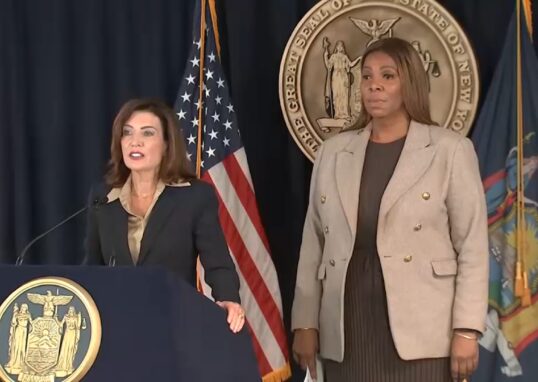
Hochul names Letitia James special prosecutor in Cornell rape case, blasts ‘bare minimum’ DA
- 0
- 21 words
The Cornell rape accuser was ‘failed’ by people obligated to protect her, Gov. Hochul said at a news conference on Friday.
Read out all
Week 6 Texas high school football scores
- 0
- 22 words
Austin High earned its first win, Cedar Ridge stayed unbeaten and district races continued to take shape across Central Texas in Week...
Read out all
Texas to build 2 new juvenile centers, including 1 in Brazoria Co., as youth gun crime increases
- 0
- 27 words
Officials said the state will be spending $300M for one to be built in Rosharon and the other near Waxahachie, Texas, as...
Read out all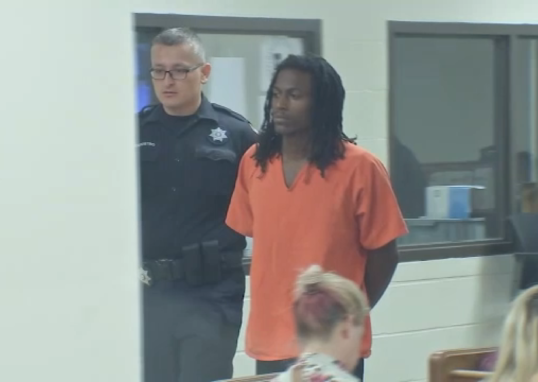
Suspect in Good Samaritan’s murder previously charged with 4 felonies while in jail, records show
- 0
- 31 words
Records show the man charged with capital murder in the shooting death of a Good Samaritan on Wednesday was previously charged with...
Read out allACL headliner deep cuts to listen to after the set
- 0
- 462 words
Music festivals are notorious for being poor places to see artists if one is attempting to fully immerse themselves in an artist’s...
Read out all