

- 0
- 596 words
For years, UT’s Counseling and Mental Health Service Center admitted it was overwhelmed. In a 2020 interview, Marla Craig, CMHC’s associate director for clinical services at the time, expressed that student demand outpaced in-house capacity. Two years prior, Craig similarly stated the center lacked plans to expand in-house counseling staff due to priority of accessibility rather than financial investments.
Student demand has climbed for nearly a decade, according to Longhorn Wellness Center executive director, Katy Redd. In 2019, she referenced a groundbreaking 77% increase in students seeking services over eight years. To combat this, the University’s solution was TimelyCare — a national platform offering 24/7 access to outside providers and aid in social distancing during COVID-19.
However, that isn’t the same story Craig told this year. Now an assistant vice president and licensed psychologist, she revealed CMHC faces no staffing shortage.
“We don’t have any problem with (staffing),” Craig said. “We’re in a good place right now to take care of our students.”
CMHC employs around 100 staff members — 62 of whom are full-time licensed clinicians. With respect to UT’s fall 2025 enrollment of 55,000, the ratio results in roughly one counselor per 887 students. This falls within the 1-1,000 to 1-1,500 range recommended by the International Accreditation of Counseling Services, the field’s accrediting body. Any perceived gap between the influx of student demand to lack of counselors that previously existed appears to have closed based on the IACS’s metric.
However, if the staffing problem that justified leaning on an outside vendor isn’t there anymore, why is TimelyCare still where students are routed?
Mechanical engineering sophomore Kenneth Tran experienced this referral firsthand. After one counseling session at CMHC, his counselor suggested TimelyCare as an option for the summer if he wished to continue mental health treatment, but he didn’t use it.
“I think with TimelyCare, it’s hard to find a place that is quiet (where) no one can hear you talk (about) sensitive subjects,” Tran said. “It’s hard to do that as a student because I’m in an apartment currently with several roommates.”
Craig said research shows virtual and in-person counseling are fairly equivalent in effectiveness. That may hold up in a controlled study. However, it does not account for students without a quiet sanctuary of their own to receive virtual counseling.
“I prefer in-person a lot because when you’re in a room with just a counselor, it has this feeling like ‘no one else can know,’” Tran said.
But what about the quality of going virtual? Because TimelyCare is not a UT-specific service, it lacks a deeper understanding of the specific pressures of being a UT student.
None of this argues for the termination of TimelyCare. The service is an accessible resource for students who are traveling, residing off campus during seasonal breaks or need care outside of CMHC’s operational hours. However, these are edge cases and not templates for routine follow-up care.
If the CMHC has sufficient staffing levels meeting the IACS’s standards, then they should treat TimelyCare as a secondary option and not a default referral process.
A better utilization of these resources is the existing model that CMHC developed and already supports: the CARE program, which embeds counselors directly in UT’s colleges. While it has grown from five clinicians to nearly 20 today, Craig said she wishes to continue its expansion. Placing counselors throughout areas where students naturally congregate, not just handing them off to a call center, is a direction worth pushing for.
Rodriguez is a psychology and philosophy junior from Houston, Texas.
Author

zcjz2d8nuy3s@modelesque.net
Related Posts
No. 8 Texas volleyball earns second conference win against Mississippi State in sweep
- 0
- 522 words
Texas volleyball began its match against the Mississippi State Bulldogs, the Longhorns’ third Southeastern Conference game this season, with a front row...
Read out all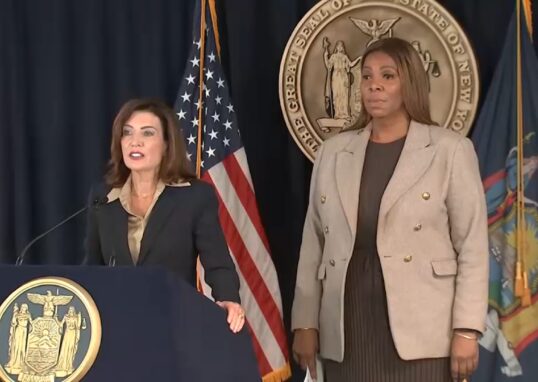
Hochul names Letitia James special prosecutor in Cornell rape case, blasts ‘bare minimum’ DA
- 0
- 21 words
The Cornell rape accuser was ‘failed’ by people obligated to protect her, Gov. Hochul said at a news conference on Friday.
Read out all
Week 6 Texas high school football scores
- 0
- 22 words
Austin High earned its first win, Cedar Ridge stayed unbeaten and district races continued to take shape across Central Texas in Week...
Read out all
Texas to build 2 new juvenile centers, including 1 in Brazoria Co., as youth gun crime increases
- 0
- 27 words
Officials said the state will be spending $300M for one to be built in Rosharon and the other near Waxahachie, Texas, as...
Read out all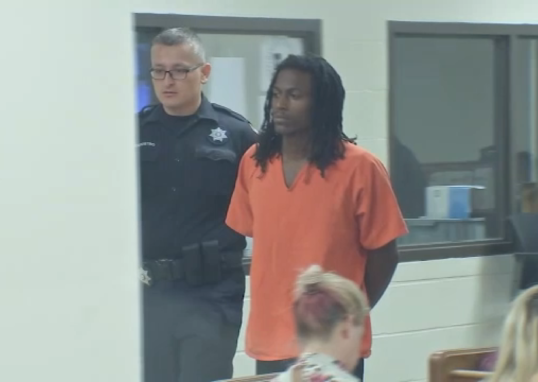
Suspect in Good Samaritan’s murder previously charged with 4 felonies while in jail, records show
- 0
- 31 words
Records show the man charged with capital murder in the shooting death of a Good Samaritan on Wednesday was previously charged with...
Read out allACL headliner deep cuts to listen to after the set
- 0
- 462 words
Music festivals are notorious for being poor places to see artists if one is attempting to fully immerse themselves in an artist’s...
Read out all